Everyone who constantly peddles the “Bitcoin will go to zero” argument conveniently ignores an important fact:
This is improbable, and in practice, almost impossible.
Why? An estimated 3.9 million BTC have been lost due to missing recovery seeds, damaged or discarded hardware wallets and other non-custodial desktop and mobile wallets.
A portion of this will most likely be recovered via specialist recovery services that aim to re-access these BTC wallets. Nonetheless, at least three million won’t be retrieved in Bitcoin’s current form.
Thus, these cannot be sold off, making BTC more resistant to sell pressure.
But there is an exception.
The only way these can eventually be recaptured is when quantum computing becomes powerful enough to decrypt the Elliptic Curve Digital Signature Algorithm (ECDSA) used to secure BTC wallets, specifically the public-private key pairs.
Bitcoin also uses the Secure Hash Algorithm 256 (SHA-256) for mining. While QC can weaken this, ECDSA is a much greater concern, which is why more research is being conducted on long-term security for public-private key pairs as opposed to SHA-256.
Andreas Antonopoulos also acknowledges that QC will eventually be able to capture BTC in these inaccessible wallets, which won’t be able to migrate to a quantum-resistant algorithm in future.
https://alorenzocrypto.medium.com/this-will-be-one-of-bitcoins-most-important-upgrades-da62bc78cfb7
There’s another factor at play: Asymmetric opportunity, a.k.a. asymmetric risk-reward.
Assuming a blockchain’s security hasn’t been (severely) compromised or its native asset hasn’t been banned worldwide, smart money will often be more inclined to buy a huge amount when the prices are dirt cheap.
Forward-thinking people who bought a ton of BTC, ETH, SOL and other cryptos when they cost peanuts.
The price will only go so low.
Ethereum remains safe and sound
Many Bitcoin detractors will remain sceptical about supporting such an energy-intensive network, despite major improvements in ASIC miner efficiency and a growing share of clean energy powering its blockchain, as I’ve covered in a recent piece.
Since Ethereum no longer has this issue following its full migration to proof-of-stake, many who still insist on supporting an alternative to Bitcoin might opt for it, even as an eventual, albeit less practical, store of value.
Despite facing growing competition from Solana, BNB Chain and other L1s, Ethereum still accounts for the lion’s share of TVL across all smart contract platforms, based on DefiLlama data.
Even if you exclude DeFi, real-world assets (RWAs) and other promising use cases for Ethereum, let’s not forget about one of the hottest topics in this space over the past 18 months.
Stablecoins.
Ethereum remains the dominant chain for issuing and running stablecoins for Tether (USD₮ and its gold-pegged XAU₮) and Circle’s USDC.
While L2s and competing L1S such as Tron and Solana collectively handle roughly 42% of the combined USDT-USDC market cap, I don’t see Ethereum losing the top spot anytime soon, particularly given its consistently high network security.
Even if stablecoins were to take market share from Bitcoin as a medium of exchange, their issuers will likely continue depending on Ethereum or another permissionless (public) blockchain to operate, at least for the foreseeable future.
What will eventually be tens (possibly hundreds) of trillions of dollars in monthly volume will require various blockchain networks, dominated by 3-4 options.
Having said this, fintech companies are working on or will create their own privately-operated blockchains. For example:
– Stripe has teamed up with Paradigm, other fintechs and Fortune 500 companies to establish Tempo, an L1 for ultra-fast, low-cost payments.
This builds on Stripe’s interest in stablecoin infrastructure, having finalised its acquisition of Bridge earlier this year, a stablecoin-focused payments platform.
– Start-ups Plasma and Stable, funded by crypto companies and VCs, are working on creating sidechains for Tether.
While these will be centralised alternatives, they remain EVM-compatible. I doubt Tether will shift the entire supply of USD₮ and XAU₮ currently on Ethereum to these L1s once they’re up and running.
As Tether and Circle manage the overwhelming majority of the stablecoin market cap, governments could easily intervene and force them to freeze transactions or blacklist wallet addresses.
This is not the case for Bitcoin and Ethereum, due to their decentralised, immutable and permissionless nature.
While I expect private L1s to take further market share from Bitcoin and Ethereum, there will still be demand for public alternatives, especially among those wanting to avoid TradFi.
Additional thoughts
There are no guarantees, but I am sure that Bitcoin and Ethereum will remain prominent networks for years to come.
I don’t see any asset dethroning Bitcoin anytime soon. Even if something superior were to come along, i.e., the same amount of decentralisation and security but with much better scalability, it will take many years for it to establish the reputation that Bitcoin is building on year after year.
Still, there will be many bearish signs to overcome in the short-term before we see BTC and ETH anywhere near their respective all-time highs:
– Institutional outflows from both ETF issuers and Bitcoin treasury companies. Strategy’s share price (NASDAQ: MSTR) has been tanking, down by over 38% in less than a month.
– Bitcoin has broken several key support levels since its $126,000 ATH, particularly the $100K milestone.
– It has also fallen and remained below the 50- and 200-day moving average for most of this month, the first time since April.
– All of these lead to the Crypto Fear and Greed Index being between Extreme Fear and Fear for most of this month, showing no signs of significant improvements in the short-term.
Despite the slow tech and most people lacking an understanding of Bitcoin and Ethereum, the signs remain promising for the world’s two largest blockchains, each continuing to offer their own set of advantages for various use cases.
Considering the ongoing reputation of these chains as the most secure decentralised digital networks, a gradual increase in global cryptocurrency adoption, infrastructure improvements and a growing range of use cases, notably asset tokenisation, it’s becoming less likely by the day that BTC and ETH will crash to zero.
Affiliate links
Use the following links to help support my channel. I receive a small commission per sale or new client at no additional cost.
https://shop.ledger.com/?r=a1b3ac23d773
Kraken
Get A$50 to your Kraken account. Unlock it after your first trade of $130 (~A$200) with code: yt7dpbgr or through this link: https://invite.kraken.com/JDNW/g5xvarar
You might also be interested in these stories:
https://medium.com/@cryptowithlorenzo/why-most-arent-ready-for-what-s-coming-with-bitcoin-5064345783ca
https://medium.com/@cryptowithlorenzo/bitcoin-is-going-to-zero-5562122f5481
Disclaimers
- N.B. None of this is financial advice; I am not a financial advisor. This content is for educational purposes only. You are ultimately responsible for your investments.
- My opinions may not reflect those of any news outlet, person, organisation, or other entity listed here.
- Please conduct thorough research before investing in any cryptocurrency assets, staking, NFTs, or other products associated with this space.
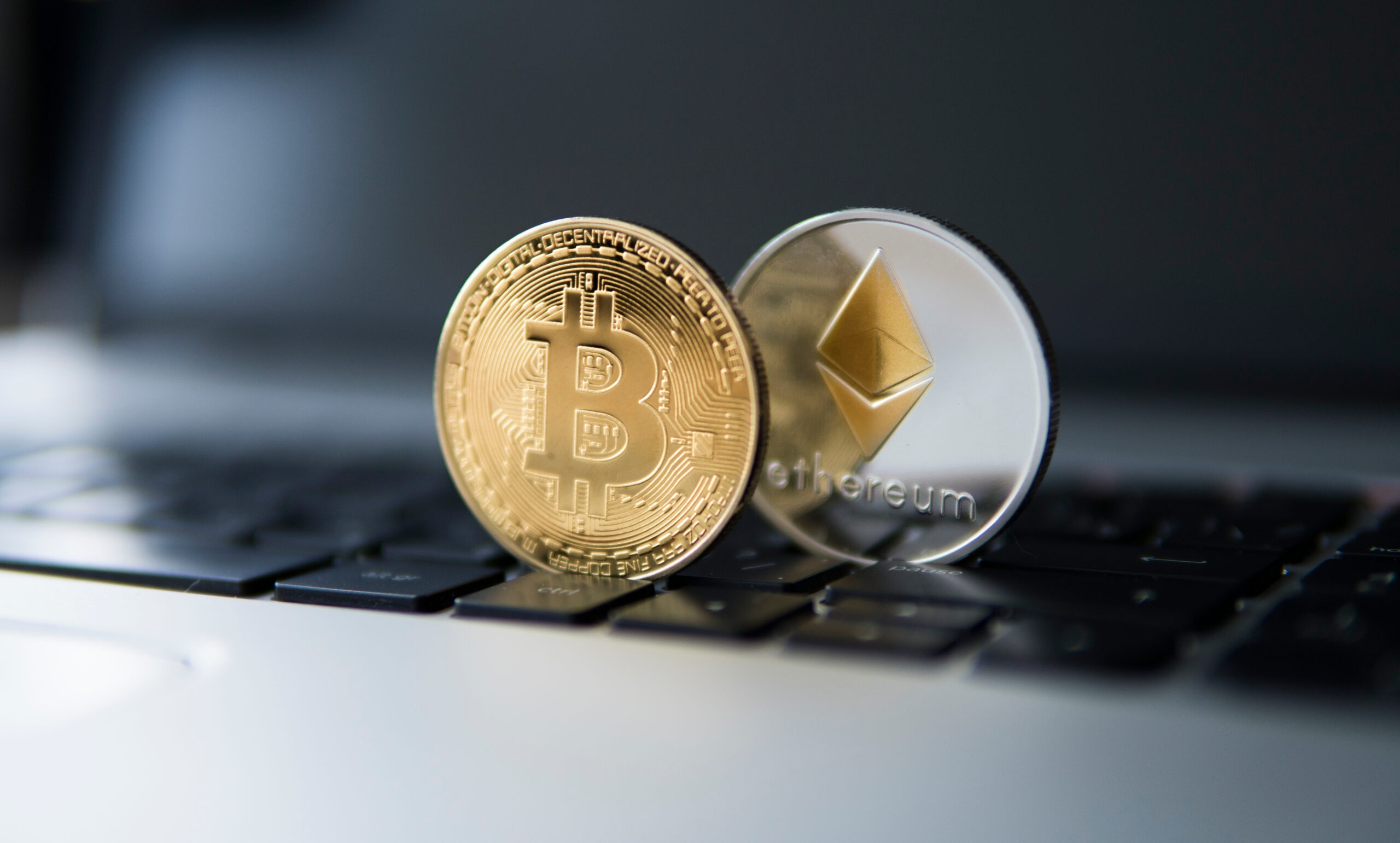
Image by Volodymyr_Shtun at Shutterstock



Methodology for calculating the non-Ethereum market cap of USDT and USDC:
The calculation first summed the net circulation values you supplied for USDT across all chains, then added the non-Ethereum portion of USDC (≈ 36 % of Circle’s $75 bn total supply). Dividing the combined non-Ethereum totals ($82.76 bn + $27 bn) by the overall market cap equivalent of USDT + USDC (~$259.46 bn) yielded a share of roughly 42 % of the combined stable coin market that runs on chains other than Ethereum.
This is a gem of a post. Simple yet effective advice.